Pressure Tank Replacement in Bath, ME
Fix rapid cycling and pressure swings with the right-sized pressure tank and switch.
Pressure Tanks for Bath Homes
A waterlogged or undersized pressure tank is one of the most common — and most misdiagnosed — well problems in Central Maine. When the tank loses its air charge, the pump kicks on and off every few seconds (short-cycling), which wears the pump out fast and gives you fluttering, inconsistent pressure. We test the tank, the air charge, and the pressure switch together, then replace a failed tank with a correctly sized one and set the switch and pre-charge so your pump runs the way it should.
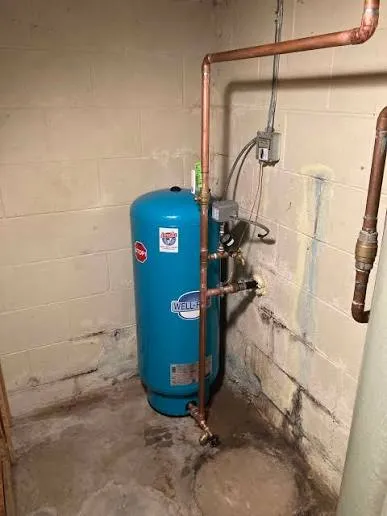
Local well service in Bath
Bath, the City of Ships, packs tight neighborhoods along the Kennebec near Bath Iron Works and then opens to rural drilled-well properties out toward Phippsburg, Woolwich across the river, and the Georgetown road. The older South End and North End homes often run on aging well systems and shallow setups, while the outlying lots draw from deep bedrock wells into the same arsenic- and uranium-bearing granite found up the Kennebec valley. Acidic, low-pH water is common and shows up as green staining and pinhole leaks in copper, and iron staining is a frequent complaint. River-valley cold settles in hard here in winter, freezing shallow lines and exposed pipe in the older housing stock's cold basements. We handle the whole system — pumps, pressure tanks, switches, freeze-ups, and water treatment — and we diagnose before we quote, so the repair matches the actual fault rather than the easiest guess.
- Diagnose short-cycling and pressure-swing complaints
- Test tank air charge, bladder, and pressure switch together
- Correctly sized replacement tank for your pump and demand
- Pressure switch, gauge, and fitting replacement
- Pre-charge and cut-in/cut-out set to spec
Need pressure tanks elsewhere? See all of our Bath well services or pressure tanks across Central Maine.
Pressure Tanks in Bath
Tell us what’s happening and we’ll call you back — local Bath service.
Neighborhoods We Cover in Bath
From in-town lots to rural drilled wells — if it’s in or around Bath, we service it.
- Downtown
- South End
- North End
- Whiskeag
- Route 1 corridor
Common Well Problems in Bath
The issues we see most on local wells — and how we fix them.
Acidic water and pinhole copper leaks
Low-pH bedrock water is common around Bath and slowly eats copper plumbing — you see it as blue-green staining and surprise pinhole leaks. An acid neutralizer raises the pH and stops the corrosion.
Aging systems in the older South/North End homes
The dense older neighborhoods near the river have plenty of well systems well past their service life — tired pumps, waterlogged tanks, and corroded fittings. We repair or replace the worn parts and bring the system back to steady pressure.
Winter freeze-ups in cold riverfront basements
River-valley cold and unheated basements freeze shallow lines in the coldest stretches. We locate and thaw the freeze, then insulate or heat-tape the weak spot.
Pressure Tanks in Bath — FAQs
Do you service Woolwich, Phippsburg, and Georgetown?
I keep getting pinhole leaks in my copper pipes — why?
Can you handle an emergency no-water call in winter?
How do I know my pressure tank is bad?
How long do pressure tanks last?
Will a bigger tank help my low water pressure?
Also Serving Near Bath
Need Pressure Tanks in Bath?
Call now for a straight answer and an up-front price — no water and frozen-line calls get priority.